
Cyber Insurance Audit: Strengthen Your Security Before Seeking Coverage
- TECHOM Systems

- 2 days ago
- 4 min read
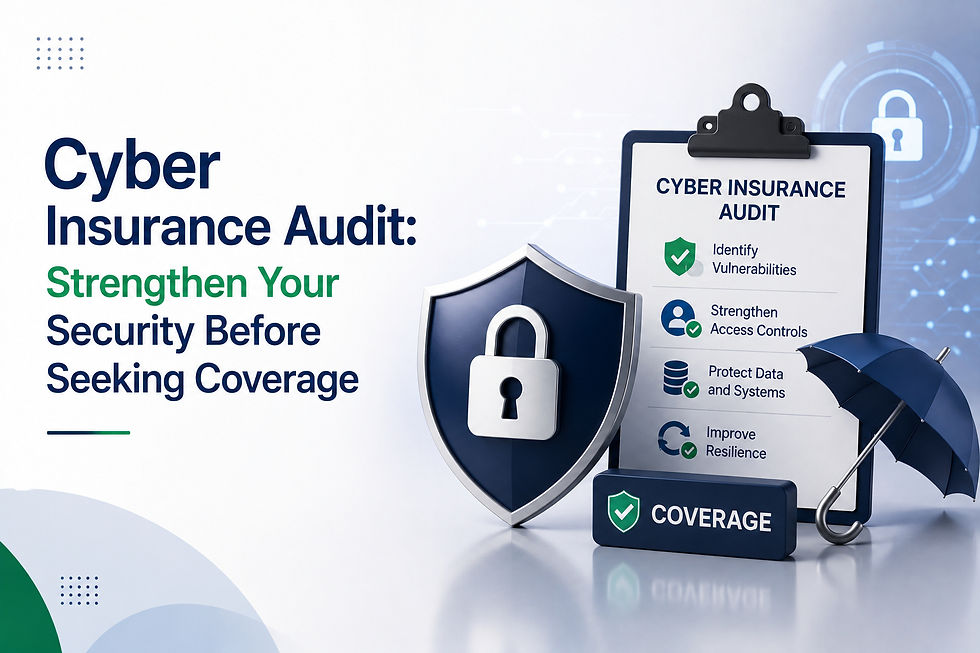
Cyberattacks are affecting businesses of every size, not just large enterprises with dedicated security teams. Ransomware, phishing campaigns, credential theft, and data breaches can interrupt operations, damage customer trust, and create significant financial costs. Because of these risks, many organisations are now considering cyber insurance as an additional layer of protection.
What often surprises business owners is that obtaining coverage is no longer a simple application process. Insurers want evidence that appropriate security controls are already in place. This is where a cyber insurance audit becomes an important part of preparing for new coverage or renewing an existing policy.
A well-planned cyber insurance audit helps businesses identify security weaknesses, improve operational readiness, and demonstrate that they are actively managing cyber risk rather than relying on insurance alone.
What Is a Cyber Insurance Audit?
A cyber insurance audit is a structured review of an organisation’s cyber security controls, policies, and operational practices. The goal is to determine whether the business meets the security standards commonly expected by cyber insurance providers. The review typically examines:
Multi-factor authentication (MFA)
Endpoint protection and antivirus tools
Patch and vulnerability management
Backup and disaster recovery processes
Email security controls
User access and permission management
Incident response procedures
Security awareness training
Cloud and remote access configurations
The purpose is not simply to satisfy an insurer’s checklist. A thorough audit provides a clear picture of the organisation’s current security posture and highlights the improvements needed to reduce both cyber risk and potential insurance complications.
Why Insurers Are Asking More Questions?
Cyber insurance providers have experienced a sharp increase in claims related to ransomware and data breaches. As a result, underwriting requirements have become much stricter. Businesses are often asked to provide evidence that they:
Apply regular software updates
Test backup restoration procedures
Use MFA for critical systems
Monitor suspicious activity
Train employees to recognise phishing attacks
Maintain documented incident response plans
Without this information, applications may be delayed, premiums may increase, or coverage may be declined altogether. Conducting a cyber insurance audit before applying allows businesses to gather the necessary evidence in advance and avoid unexpected problems during the approval process.
Common Gaps Found During Audits
Many organisations assume their environment is more secure than it actually is. During a cyber insurance audit, common issues frequently include:
MFA enabled for some systems but not all critical services
Backups that have never been tested for restoration
Former employee accounts that remain active
Inconsistent patch management across devices
Weak administrator password practices
Lack of documented incident response procedures
Insufficient monitoring of remote access activity
These gaps may seem minor individually, but together they can significantly increase the likelihood of a successful cyberattack and may affect how an insurer evaluates the business.
The Business Benefits Beyond Insurance
Although the immediate objective may be obtaining coverage, the benefits of a cyber insurance audit extend well beyond insurance approval. A structured review can help businesses:
Reduce the risk of ransomware and phishing incidents
Improve backup reliability and recovery readiness
Strengthen access controls and user management
Support regulatory and contractual compliance requirements
Improve business continuity planning
Increase confidence among customers and partners
Prioritise future security investments more effectively
In many cases, the security improvements identified during the audit provide ongoing operational value even if an insurance claim is never made.
Why a Cyber Security Assessment Is Often the First Step?
Before conducting an insurance-focused review, many organisations benefit from a broader cyber security assessment. This type of assessment evaluates networks, cloud services, endpoints, and security controls to identify vulnerabilities that could increase overall cyber risk.
The findings from a cyber security assessment can then be used to strengthen the environment before the insurer performs its evaluation. This proactive approach helps businesses address the most critical weaknesses first and improves the chances of meeting insurer expectations without major delays.
The Value of Independent IT Audit Services
Internal IT teams are often focused on supporting users, maintaining systems, and resolving day-to-day technical issues. Because they work within the same environment continuously, long-standing weaknesses can sometimes be overlooked.
Professional IT audit services provide an independent perspective. External auditors can compare existing configurations and processes against recognised industry best practices, validate whether controls are operating effectively, and identify practical opportunities for improvement.
For businesses preparing for a cyber insurance application or renewal, IT audit services can provide the objective evidence and documentation that insurers increasingly expect to see.
When Should You Conduct a Cyber Insurance Audit?
A cyber insurance audit is particularly valuable when a business is:
Applying for cyber insurance for the first time
Renewing an existing policy
Migrating to Microsoft 365 or other cloud platforms
Expanding remote or hybrid working arrangements
Handling sensitive customer or financial data
Opening additional office locations
Experiencing rapid business growth
Responding to new compliance or contractual requirements
Regular reviews help ensure that security controls continue to align with both business operations and evolving insurer expectations.
Final Thoughts
Cyber insurance can provide valuable financial protection, but it is no longer viewed as a substitute for good cyber security practices. Insurers increasingly expect businesses to demonstrate that reasonable security measures are already in place before coverage is approved.
A cyber insurance audit helps organisations evaluate their security posture, identify gaps that could affect coverage, and implement practical improvements before applying for or renewing a policy. By combining proactive security controls, regular reviews, independent expertise, and ongoing monitoring, businesses can improve both their insurability and their overall resilience against modern cyber threats.
For organisations that depend heavily on digital systems and customer data, a cyber insurance audit is not simply a compliance exercise. It is a practical investment in stronger security, improved operational readiness, and a more resilient business environment.


Comments